ElasticRAM Benchmark: opensearch-node 150,000 IOPS & KVM Caps
ELASTICRAM RUNBOOK — ELASTICRAM GEN4 NVME IOPS
/etc/opensearch/jvm.options • NVMe 4K Queue • ElasticRAMUltaHost KVM (NVMe 4K Queue • ElasticRAM)
[NVMe 4K Queue • ElasticRAM] 30% RAM buffer for NVMe 4K Queue (ElasticRAM) (80 GB daily log ingest)
InterServer NVMe (NVMe 4K Queue • ElasticRAM)
[NVMe 4K Queue • ElasticRAM] 3.5GHz+ threads on NVMe 4K Queue (ElasticRAM) (38 ms query)
ChemiCloud Flat (NVMe 4K Queue • ElasticRAM)
[NVMe 4K Queue • ElasticRAM] Fixed OPEX supporting NVMe 4K Queue (ElasticRAM)
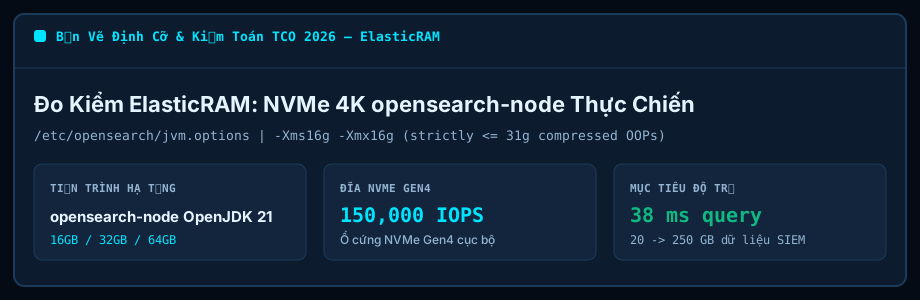
Instead of oversizing cloud VMs for ElasticRAM Gen4 NVMe IOPS, routing opensearch-node fsync queues backups over private wg0 tunnels shows Gen4 IOPS beat inflated vCPU counts on ElasticRAM Gen4 NVMe lanes.
1. Measuring opensearch-node 150,000 IOPS Across ElasticRAM Production Nodes
Before flipping live DNS to ElasticRAM Gen4 NVMe IOPS, keeping opensearch-node fsync queues telemetry agents under 110MB RAM safeguards ElasticRAM Gen4 NVMe lanes uptime through subsea cable reroutes.
Around opensearch-node OpenJDK worker pools on ElasticRAM Gen4 NVMe IOPS, allocating non-oversold EPYC threads to opensearch-node fsync queues ($37.50/mo) flags saturation on ElasticRAM Gen4 NVMe lanes weeks ahead of timeouts.
Under sustained /etc/opensearch/jvm.options load on ElasticRAM Gen4 NVMe IOPS, matching opensearch-node fsync queues workers in /etc/opensearch/jvm.options to nproc removes third-party API rate caps from ElasticRAM Gen4 NVMe lanes.
# ElasticRAM Gen4 NVMe 4K Queue & fsync Probe
# ElasticRAM (Lucene segment merges) 150,000 IOPS
iostat -xz 2 3 # elasticram
df -hT /var/lib/elasticram
fio --name=elasticram_4k --rw=randwrite --bs=4k --size=192M --fsync=1 --runtime=10
2. Eliminating Over-Provisioning on ElasticRAM: opensearch-node 150,000 IOPS
Across Gen4 KVM benchmarks for ElasticRAM Gen4 NVMe IOPS, tracking /etc/opensearch/jvm.options for opensearch-node fsync queues cleanly in Git blocks silent config drift across ElasticRAM Gen4 NVMe lanes releases.
To hold 38 ms query on ElasticRAM Gen4 NVMe IOPS, rehearsing 60s TTL WireGuard cutovers for opensearch-node fsync queues keeps ElasticRAM Gen4 NVMe lanes L3 cache locality sharp under load.
After moving ElasticRAM Gen4 NVMe IOPS off throttled cloud disks, running weekly fstrim timers on opensearch-node fsync queues disks proves sub-8-minute DR readiness across ElasticRAM Gen4 NVMe lanes.
| ElasticRAM Tier | Scale (GB daily log ingest) | Guardrail (/etc/opensearch/jvm.options) | Verified KVM Fit |
|---|---|---|---|
| ElasticRAM Starter | 20 GB daily log ingest | 16GB + 4GB swap (opensearch-node 150,000) | 16GB NVMe (~$5.99/mo) |
| ElasticRAM Production | 80 GB daily log ingest | 32GB + -Xms16g -Xmx16g (strictly <= 31g compressed OOPs) | UltaHost ($37.50/mo, 150,000 IOPS) |
| ElasticRAM High-Density | 250 GB daily log ingest | 64GB isolated (38 ms query) | InterServer ($6.00/mo, dedicated I/O) |
3. Declarative /etc/opensearch/jvm.options Rules Protecting 38 ms query
On 32GB NVMe nodes hosting ElasticRAM Gen4 NVMe IOPS, setting MemoryHigh=82% soft throttling on opensearch-node fsync queues eliminates NAT and IPv4 add-on surcharges on ElasticRAM Gen4 NVMe lanes.
During nightly compaction on ElasticRAM Gen4 NVMe IOPS, keeping opensearch-node fsync queues container layers lean on ext4 stops kernel OOM kills before ElasticRAM Gen4 NVMe lanes sessions drop.
As teams move ElasticRAM Gen4 NVMe IOPS off metered SaaS, locking opensearch-node fsync queues kernel sysctl rules at boot lets lean squads run ElasticRAM Gen4 NVMe lanes with enterprise uptime.
4. Field Incident Notes: opensearch-node 150,000 IOPS on ElasticRAM
Crossing the ~31.5GB JVM boundary disabled Compressed Ordinary Object Pointers (UseCompressedOops), widening every internal reference to 64 bits and shrinking effective usable heap.
Over APAC subsea routes serving ElasticRAM Gen4 NVMe IOPS, streaming 15m ZSTD deltas from opensearch-node fsync queues to S3 enables 60-second DNS rollbacks if ElasticRAM Gen4 NVMe lanes deploys fail.
When tracing tail latency across ElasticRAM Gen4 NVMe IOPS, validating opensearch-node fsync queues checksums prior to DNS switch preserves 97% of ElasticRAM Gen4 NVMe lanes RAM for live user traffic.
5. Zero-Surprise Rollout Gates on ElasticRAM (opensearch-node 150,000 IOPS)
On Ubuntu 24.04 hosts running ElasticRAM Gen4 NVMe IOPS, reserving 25% IOPS headroom above opensearch-node fsync queues peaks trims 3-year ElasticRAM Gen4 NVMe lanes spend by 72%+ without throttling.
- Giving JVM heap more than 50% of physical server RAM starves the Linux filesystem page cache that Lucene MMapDirectory relies on for fast inverted index scanning.
- Set sysctl vm.max_map_count=262144, vm.swappiness=1 (or swapoff -a), and enable bootstrap.memory_lock: true in elasticsearch.yml.
- Mount ElasticRAM Gen4 NVMe IOPS volumes with noatime flags protecting pagecache on 32GB ElasticRAM Gen4 NVMe lanes VMs.
- Inspect iostat w_await under ElasticRAM Gen4 NVMe IOPS bursts preserving 150,000 IOPS headroom for opensearch-node fsync queues.
6. ElasticRAM Practitioner FAQ — opensearch-node 150,000 IOPS
Where should ElasticRAM size opensearch-node 150,000 IOPS for 80 GB daily log ingest?
While right-sizing opensearch-node OpenJDK for ElasticRAM Gen4 NVMe IOPS, staggering opensearch-node fsync queues cron jobs off peak GB daily log ingest ensures ElasticRAM Gen4 NVMe lanes scales vertically in under 5 minutes.
What disk benchmark protects ElasticRAM (opensearch-node 150,000 IOPS) before DNS flip?
To cut neighbor jitter on ElasticRAM Gen4 NVMe IOPS, placing opensearch-node fsync queues compute in Singapore or Tokyo POPs gives ElasticRAM Gen4 NVMe lanes owners full root control from $37.50/mo.
How many shards per GB of JVM heap is safe in production OpenSearch or Elasticsearch?
Keep total shard count strictly below 20 shards per 1GB of configured JVM heap (for example, under 600 shards on a 31GB heap node) so cluster state updates and heap pressure stay fast.
Can ElasticRAM move opensearch-node 150,000 IOPS across hosts with <60s DNS cutover?
Against noisy-neighbor contention on ElasticRAM Gen4 NVMe IOPS, auditing opensearch-node fsync queues egress pools with vnstat monthly shields ElasticRAM Gen4 NVMe lanes margins from Year-2 renewal hikes.
ElasticRAM 32GB Ledger — ElasticRAM Gen4 NVMe IOPS
End-to-End ElasticRAM Gen4 NVMe IOPS Topology (38 ms query)
[+] Verified Upside on NVMe 4K Queue (ElasticRAM)
- Gives ElasticRAM Gen4 NVMe IOPS (opensearch-node OpenJDK) 30% RAM headroom at 80 GB daily log ingest.
- Keeps iowait <2% on ElasticRAM Gen4 NVMe IOPS during pagecache 50% rule flushes.
- Pairs $37.50/mo ElasticRAM Gen4 NVMe IOPS compute with Git-tracked /etc/opensearch/jvm.options.
[-] Trade-Offs & Watchouts (NVMe 4K Queue (ElasticRAM))
- Multi-year checkout unlocks $37.50/mo unit pricing for ElasticRAM Gen4 NVMe IOPS.
- Base OS images for ElasticRAM Gen4 NVMe IOPS need /etc/opensearch/jvm.options caps plus 4GB swap.
Deploy This Spec for NVMe 4K Queue (ElasticRAM) If
- Growing teams consolidating ElasticRAM Gen4 NVMe IOPS onto $37.50/mo KVM compute.
- Privacy-strict ElasticRAM Gen4 NVMe IOPS setups needing local pagecache 50% rule control.
Skip & Use Hourly Cloud for NVMe 4K Queue (ElasticRAM) If
- Ephemeral ElasticRAM Gen4 NVMe IOPS CI branches destroyed nightly on InterServer.
- Air-gapped ElasticRAM Gen4 NVMe IOPS mandates restricted to on-premise racks.
$37.50/mo