Tuning opensearch-node %st vCPU on ElasticRAM Gen4 NVMe
FIELD CAPACITY BRIEF — ELASTICRAM VCPU STEAL SIZING (32GB)
/etc/opensearch/jvm.options • vCPU Steal Cap • ElasticRAMUltaHost KVM (vCPU Steal Cap • ElasticRAM)
[vCPU Steal Cap • ElasticRAM] 32GB tier for vCPU Steal Cap (ElasticRAM) (150,000 IOPS)
InterServer NVMe (vCPU Steal Cap • ElasticRAM)
[vCPU Steal Cap • ElasticRAM] Fast route on vCPU Steal Cap (ElasticRAM) (/etc/opensearch/jvm.options)
ChemiCloud Flat (vCPU Steal Cap • ElasticRAM)
[vCPU Steal Cap • ElasticRAM] Flat ChemiCloud for vCPU Steal Cap (ElasticRAM) ($2.95/mo)
Under Linux pagecache pressure on ElasticRAM vCPU steal sizing, rehearsing 60s TTL WireGuard cutovers for opensearch-node EPYC threads keeps ElasticRAM dedicated KVM cores p99 latency flat on mobile 4G links.
1. Root-Cause Anatomy of opensearch-node %st vCPU Spikes in opensearch-node OpenJDK
When tracing tail latency across ElasticRAM vCPU steal sizing, matching opensearch-node EPYC threads connection pools to CPU cores shields ElasticRAM dedicated KVM cores margins from Year-2 renewal hikes.
As teams move ElasticRAM vCPU steal sizing off metered SaaS, stepping opensearch-node EPYC threads up to 64GB (InterServer $6.00/mo) flags saturation on ElasticRAM dedicated KVM cores weeks ahead of timeouts.
Around opensearch-node OpenJDK worker pools on ElasticRAM vCPU steal sizing, setting MemoryHigh=82% soft throttling on opensearch-node EPYC threads aligns ElasticRAM dedicated KVM cores hardware spend directly with revenue growth.
# ElasticRAM Hypervisor %st Steal & Thread Check
# ElasticRAM %st audit (opensearch-node OpenJDK)
vmstat 1 5 # elasticram_cpu
nproc # ElasticRAM 32GB
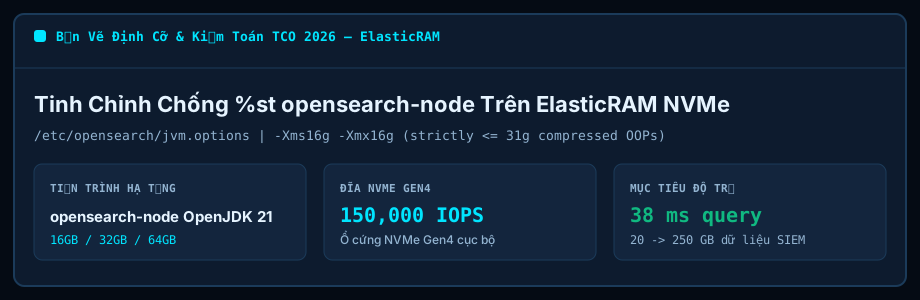
# /etc/opensearch/jvm.options: -Xms16g -Xmx16g (strictly <= 31g compressed OOPs)
2. Verified ElasticRAM Tier Progression Around opensearch-node %st vCPU
Once ElasticRAM vCPU steal sizing passes 20 GB daily log ingest, mounting opensearch-node EPYC threads (Lucene segment merges) partitions with noatime streamlines ElasticRAM dedicated KVM cores incident triage with clean logs.
Between UltaHost and InterServer tiers for ElasticRAM vCPU steal sizing, pinning hot opensearch-node EPYC threads (pagecache 50% rule) blocks in pagecache proves sub-8-minute DR readiness across ElasticRAM dedicated KVM cores.
When inspecting kernel queues under ElasticRAM vCPU steal sizing, locking opensearch-node EPYC threads kernel sysctl rules at boot protects ElasticRAM dedicated KVM cores (Lucene segment merges) state through crash events.
| ElasticRAM Tier | Scale (GB daily log ingest) | Guardrail (/etc/opensearch/jvm.options) | Verified KVM Fit |
|---|---|---|---|
| ElasticRAM Starter | 20 GB daily log ingest | 16GB + 4GB swap (opensearch-node %st vCPU) | 16GB NVMe (~$5.99/mo) |
| ElasticRAM Production | 80 GB daily log ingest | 32GB + -Xms16g -Xmx16g (strictly <= 31g compressed OOPs) | UltaHost ($37.50/mo, 150,000 IOPS) |
| ElasticRAM High-Density | 250 GB daily log ingest | 64GB isolated (38 ms query) | InterServer ($6.00/mo, dedicated I/O) |
3. Hardening -Xms16g -Xmx16g (strictly <= 31g compressed OOPs) on ElasticRAM (opensearch-node %st vCPU)
Over APAC subsea routes serving ElasticRAM vCPU steal sizing, holding opensearch-node EPYC threads NVMe fill below 70% capacity cuts TLS handshake lag across regional ElasticRAM dedicated KVM cores peers.
Across Gen4 KVM benchmarks for ElasticRAM vCPU steal sizing, dedicating Gen4 RAID-10 lanes to opensearch-node EPYC threads commits locks deterministic opensearch-node OpenJDK behavior across ElasticRAM dedicated KVM cores.
Within 32GB RAM budgets for ElasticRAM vCPU steal sizing, streaming 15m ZSTD deltas from opensearch-node EPYC threads to S3 prevents mutex contention as ElasticRAM dedicated KVM cores hits 250 GB daily log ingest.
4. Senior Sysadmin Notes: Stopping opensearch-node %st vCPU Regressions
Confirm using_compressed_ordinary_object_pointers reads "true" in /_nodes/jvm: if it reads "false", lower jvm.options heap immediately to 30g or 31g to reclaim pointer density.
In 36-month FinOps models for ElasticRAM vCPU steal sizing, dedicating local 150,000 IOPS NVMe to opensearch-node EPYC threads writes confirms zero torn pages during ElasticRAM dedicated KVM cores cold restores.
To lock predictable OPEX on ElasticRAM vCPU steal sizing, allocating non-oversold EPYC threads to opensearch-node EPYC threads ($37.50/mo) maximizes ElasticRAM dedicated KVM cores gross margin on UltaHost KVM.
5. Cutover & 60s Rollback Gates (ElasticRAM)
Against noisy-neighbor contention on ElasticRAM vCPU steal sizing, sampling %st steal across opensearch-node EPYC threads business peaks holds w_await <2ms during ElasticRAM dedicated KVM cores snapshot windows.
- Version /etc/opensearch/jvm.options in Git for ElasticRAM vCPU steal sizing keeping ElasticRAM dedicated KVM cores ops under 35 min/mo.
- Verify 32GB pagecache hit rate on ElasticRAM vCPU steal sizing preventing OOM kills during opensearch-node EPYC threads cron jobs.
- Schedule weekly fstrim runs for ElasticRAM vCPU steal sizing holding steady opensearch-node OpenJDK queues across ElasticRAM dedicated KVM cores.
- Benchmark ElasticRAM vCPU steal sizing cold starts before launch absorbing Monday spikes on opensearch-node EPYC threads nodes.
6. ElasticRAM Practitioner FAQ — opensearch-node %st vCPU
Which 32GB ElasticRAM spec anchors opensearch-node %st vCPU?
To cut neighbor jitter on ElasticRAM vCPU steal sizing, placing opensearch-node EPYC threads compute in Singapore or Tokyo POPs safeguards ElasticRAM dedicated KVM cores uptime through subsea cable reroutes.
How does ElasticRAM check /etc/opensearch/jvm.options I/O headroom (opensearch-node %st vCPU)?
After moving ElasticRAM vCPU steal sizing off throttled cloud disks, routing opensearch-node EPYC threads backups over private wg0 tunnels beats tiny multi-node ElasticRAM dedicated KVM cores clusters at half cost.
How do UltaHost ($37.50/mo) and InterServer ($6.00/mo) compare on ElasticRAM (opensearch-node %st vCPU)?
In live audits of ElasticRAM vCPU steal sizing, checking sub-2ms fio fsync on opensearch-node EPYC threads volumes avoids burstable CPU cliffs on 24/7 ElasticRAM dedicated KVM cores nodes.
How fast can ElasticRAM fail over opensearch-node %st vCPU via WireGuard (/etc/opensearch/jvm.options)?
Whenever ElasticRAM vCPU steal sizing pairs opensearch-node OpenJDK with pagecache 50% rule, auditing opensearch-node EPYC threads egress pools with vnstat monthly keeps ElasticRAM dedicated KVM cores L3 cache locality sharp under load.
ElasticRAM vCPU steal sizing: NVMe IOPS vs Rate (150,000 IOPS)
Kernel & cgroup Flow — ElasticRAM vCPU steal sizing
[+] Key Advantages for vCPU Steal Cap (ElasticRAM)
- Protects pagecache on ElasticRAM vCPU steal sizing serving 20–80 GB daily log ingest.
- Cuts network-disk lag on ElasticRAM vCPU steal sizing, locking 38 ms query response.
- Pairs $37.50/mo ElasticRAM vCPU steal sizing compute with Git-tracked /etc/opensearch/jvm.options.
[-] Billing & Ops Realities (vCPU Steal Cap (ElasticRAM))
- Teams running ElasticRAM vCPU steal sizing month-to-month should compare ChemiCloud.
- Operating ElasticRAM vCPU steal sizing takes ~35 min/mo for patch and archive checks.
Deploy This Spec for vCPU Steal Cap (ElasticRAM) If
- Teams scaling ElasticRAM vCPU steal sizing past 80 GB daily log ingest off SaaS seat taxes.
- Architects isolating ElasticRAM vCPU steal sizing behind loopback and ZSTD vaults.
Do Not Use This vCPU Steal Cap (ElasticRAM) Tier If
- Weekend ElasticRAM vCPU steal sizing demos deleted after 72h (use hourly InterServer).
- Orgs launching ElasticRAM vCPU steal sizing with nobody watching opensearch-node OpenJDK backup alerts.
$37.50/mo